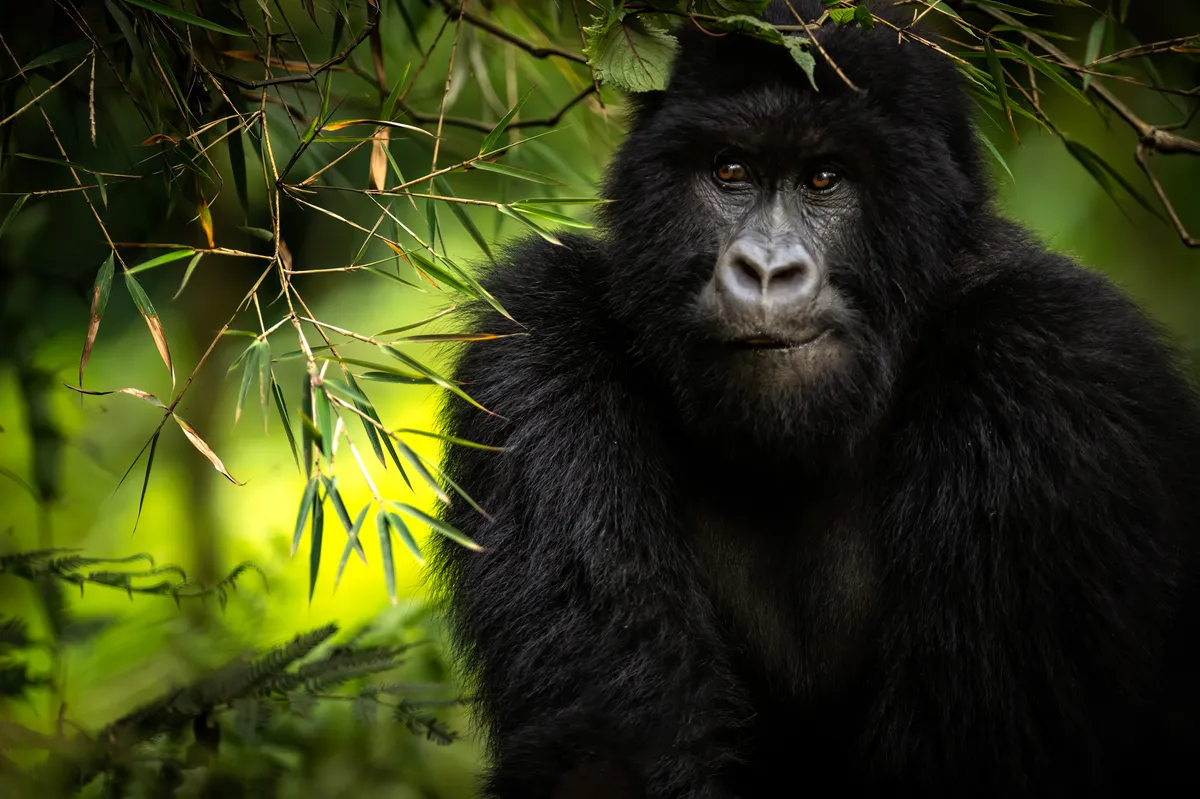
In 1967, Dian Fossey set up camp at altitude in the Virunga Mountains of Rwanda and began a study that would change the way the world understood what it means to be an ape. She spent eighteen years in the forest. What she found was not wilderness in the sense of emptiness. It was family — in the most literal, recognisable, human sense of the word.
The Number That Changes Everything
1,063. That is how many mountain gorillas remain on earth. The number is precise because they have all been counted — individually, by name, by the rangers and researchers of the Uganda Wildlife Authority, the Rwanda Development Board, and the Institut Congolais pour la Conservation de la Nature, working alongside the Dian Fossey Gorilla Fund and the International Gorilla Conservation Programme.
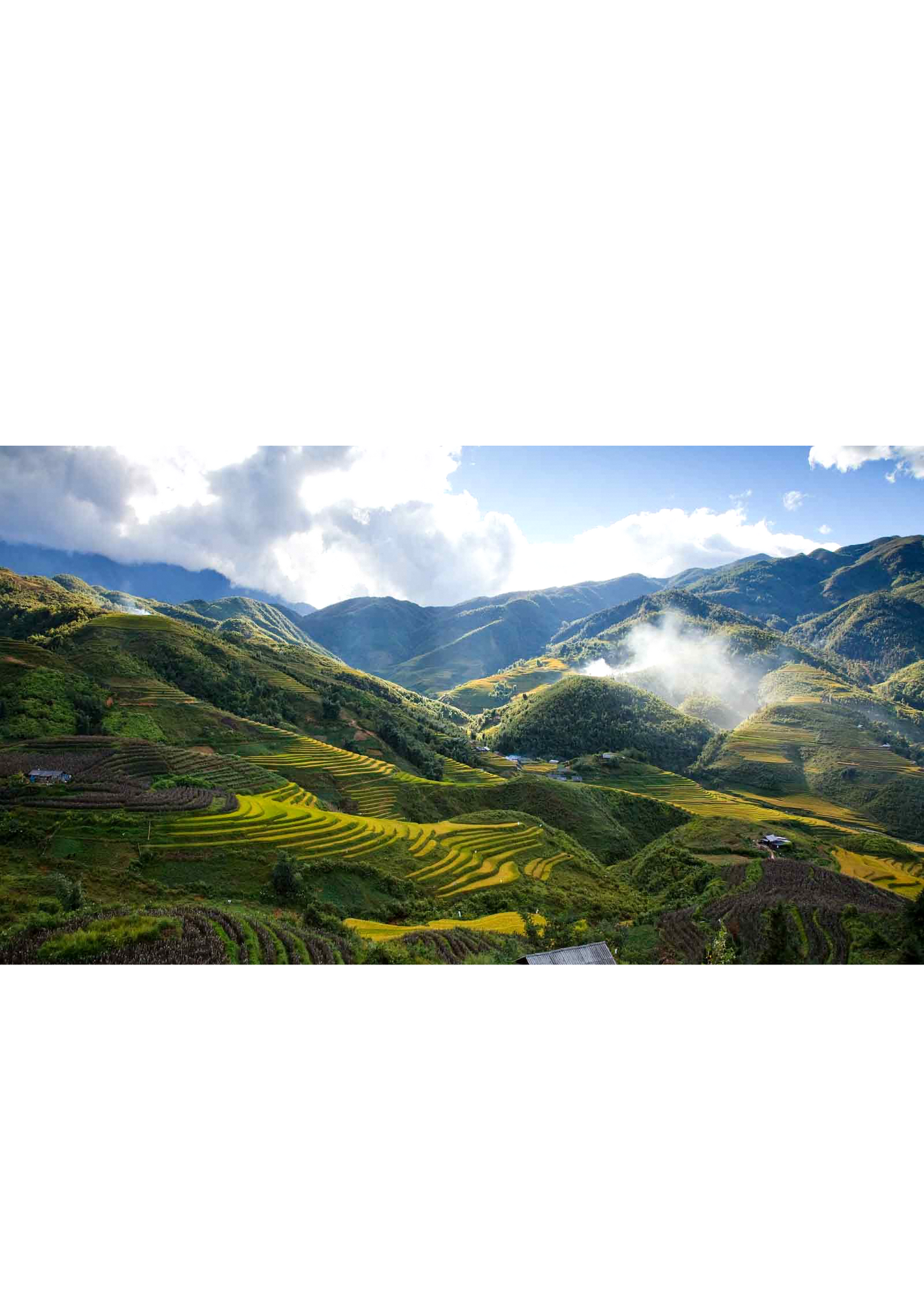
Mountain gorillas cannot be kept in captivity. They do not survive outside their forest habitats. There are no mountain gorillas in any zoo on earth. They exist in exactly two places: the Virunga Massif — a chain of extinct and active volcanoes shared between Uganda, Rwanda, and the Democratic Republic of Congo — and Bwindi Impenetrable National Park in southwestern Uganda. Nowhere else. That is the complete distribution of the species.
In 1989, the population stood at 620. The species was, by every scientific measure, on a trajectory toward extinction. The number today — 1,063 — represents one of the most significant conservation reversals in the history of wildlife protection. It did not happen by accident. It happened by design, and the design includes you.
How Tracking Works
The day begins at the park's briefing station, where groups receive an orientation from a Uganda Wildlife Authority ranger. The briefing covers the rules, the distance requirements, the protocol for gorilla approach, the emergency procedures. It is thorough and it is not optional.
Permits are limited per habituated family — in Uganda, eight visitors per family per day. The trackers have already left before dawn. Their job is to find the family, who have been sleeping since dusk and whose sleeping nest was located the evening before. Most mornings, the family is located within two hours. When the tracker radios their position, the guide leads the group through the undergrowth to meet them.
Habituated means accustomed to quiet human presence at a prescribed distance. It does not mean tame. It does not mean domesticated. The silverback is wild, his decisions are his own, and if he is uncomfortable with something — a guest moving too quickly, a sound that unsettles him, the behaviour of a juvenile that draws him close to the group — the guide reads his signals and the session adjusts or ends. The families have names: Mubare was Uganda's first habituated family, accepting visitors since 1993. Rushegura, Habinyanja, Bitukura, Nkuringo, and several others across Bwindi's four sectors. Each has its own character, its own family dynamics, its own particular way of occupying the forest.
You have one hour with them. Sixty minutes from the moment the guide declares contact. At the end of the hour, you withdraw, regardless of what is happening. The guide signals. You walk back out.
The Rules and Why They Are Not Arbitrary
Seven metres minimum distance at all times. No flash photography — the sudden bright light distresses the animals and can trigger a stress response that disrupts the family. Mask if you have any respiratory symptoms — mountain gorillas share 98.3% of human DNA and are susceptible to human respiratory diseases. A common cold can kill a gorilla infant. This is not a hypothetical risk; there are documented cases.
One hour maximum per day per family. Not because the experience cannot sustain more — it can, easily — but because the cumulative effect of extended human presence creates a form of chronic stress that affects gorilla behaviour, breeding patterns, and social structure over time. The limit is calibrated by decades of observational data from the field.
No eating or drinking in the gorillas' presence. No sudden movements. No raised voices. These rules exist at the intersection of the gorillas' wellbeing and your own safety — a silverback who feels threatened is an animal whose response you cannot predict and whose strength exceeds any comparison you might make. The rules are not bureaucratic inconveniences. They are the reason that 1,063 exists rather than 620.
The Permit Economy
A Uganda gorilla tracking permit costs $800. A Rwanda permit costs $1,500. Both figures are a matter of deliberate conservation policy. The cost is set at a level that limits visitor numbers — by price, not just by permit quota — while generating revenue sufficient to fund the protection infrastructure that keeps the gorillas alive.
The revenue flows directly to the Uganda Wildlife Authority, which uses it to fund ranger salaries, patrol equipment, vehicle maintenance, anti-poaching operations, and veterinary intervention for injured or ill gorillas. It also funds the community benefit-sharing schemes that distribute a percentage of park income to the communities living at the park's boundary.
The permit is not a tourist tax. It is a conservation instrument. The gorilla tracking economy in Uganda and Rwanda has generated hundreds of millions of dollars in conservation investment over the past three decades. That investment is the direct cause of the population growth from 620 to 1,063. When you purchase a permit, you are not paying for an experience. You are funding the mechanism that produces one.
The Community Dimension
Before gorilla tourism, the land at Bwindi's boundary was a source of conflict. Communities that had lived adjacent to the forest for generations found their livelihoods constrained by conservation rules that appeared to benefit distant governments and international organisations, not local people. Forest encroachment was common. Poaching — not of gorillas specifically, but of forest resources including bushmeat — was widespread. The gorillas were perceived, in some quarters, as the reason people were poor.
Revenue-sharing changed the calculation. The Uganda Wildlife Authority distributes 20% of gorilla permit revenue to communities adjacent to the park. That income funds schools, health clinics, clean water projects, and agricultural support. It makes the living gorilla economically valuable to the community in a way that competes directly with the alternative uses of the forest.
The result is observable. Local communities now include former poachers who work as rangers, trackers, and guides. The community investments funded by permit revenue are visible in every village near the park. The relationship between conservation and community is not perfectly resolved — no such relationship is — but it is functional in a way that it was not before, and the gorilla population reflects it.
What Responsible Tracking Looks Like in Practice
Book through operators who use UWA-licensed guides. In Uganda, the Uganda Wildlife Authority is the sole authorised permit-issuing body. Permits purchased through unlicensed intermediaries — a practice that occurs, and that undercuts both the price and the conservation benefit — do not carry the same guarantees and may not involve the trained guides whose skills make the difference between a safe, meaningful experience and a problematic one.
Follow the guide's instructions precisely. When he signals stop, stop. When he signals to crouch, crouch. When he signals to move back, move back. These signals are responses to what he is reading in the gorillas' behaviour — signals that you do not yet have the experience to read yourself, but that he has spent years learning to interpret with accuracy.
If a gorilla approaches you — and it happens, particularly with juveniles who are curious and not yet bound by the same caution as adults — remain still. Look down, not directly at the animal. Do not run. Running triggers a pursuit response. Stillness and averted gaze signal non-aggression in gorilla social language. Your guide will be managing the situation. Trust him completely.
These are the gorillas' terms. Not ours. We are guests in their home, bound by their protocols, present at their tolerance. That is not a constraint. That is the entire point.
The mountain gorilla is the only great ape whose population is increasing. That is not luck. That is what happens when tourism becomes conservation.
Responsible tracking is not a constraint on the experience. It is the reason there is an experience at all. The silverback who looked at you from four metres, the juvenile who somersaulted past your feet, the family that went about its morning as though your presence were an entirely ordinary fact — these things exist because someone, decades ago, set the rules, enforced the limits, and made the case that the forest was worth protecting at the price of the alternative. Your presence, inside the rules, continues that argument.