Every luxury traveller knows the Mara. Far fewer have stood at the source of the Nile, or watched the sun set over Lake Bunyonyi from a private veranda, the hills terraced into geometry by centuries of farming, the water below a particular shade of blue that has no equivalent on a colour chart.
The Pearl, Overlooked
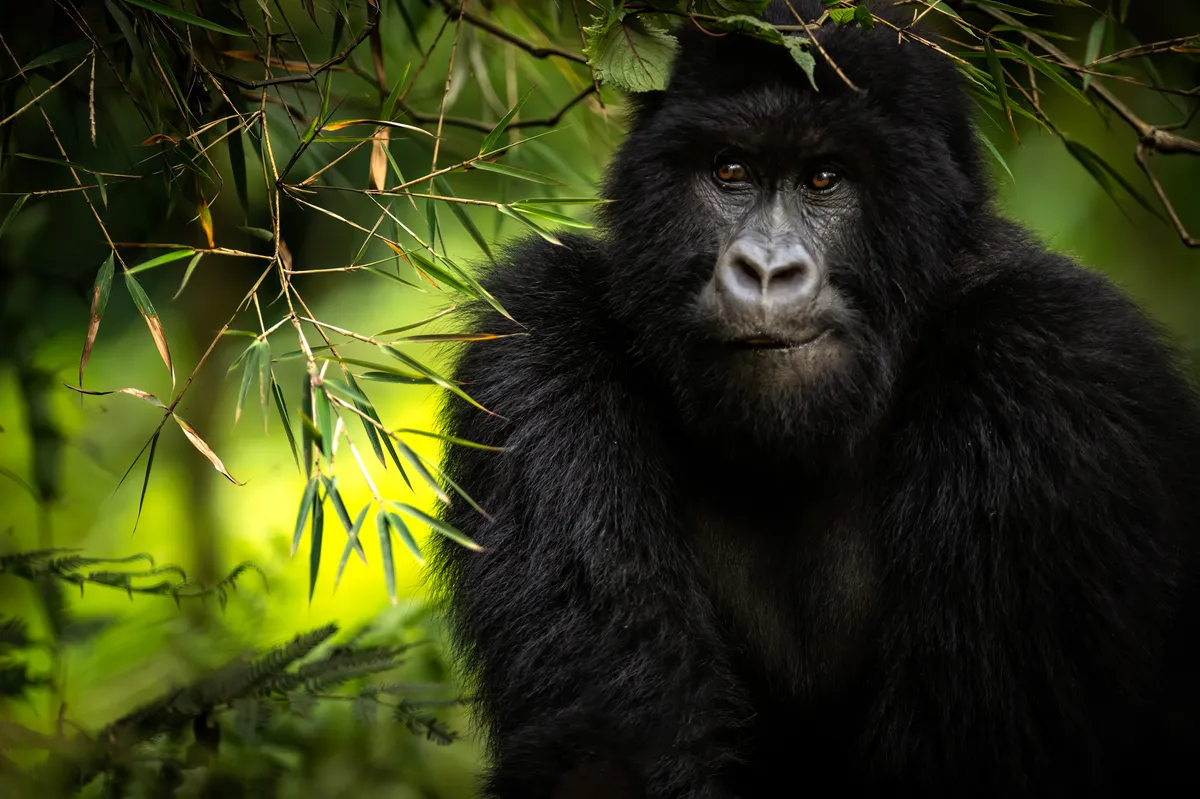
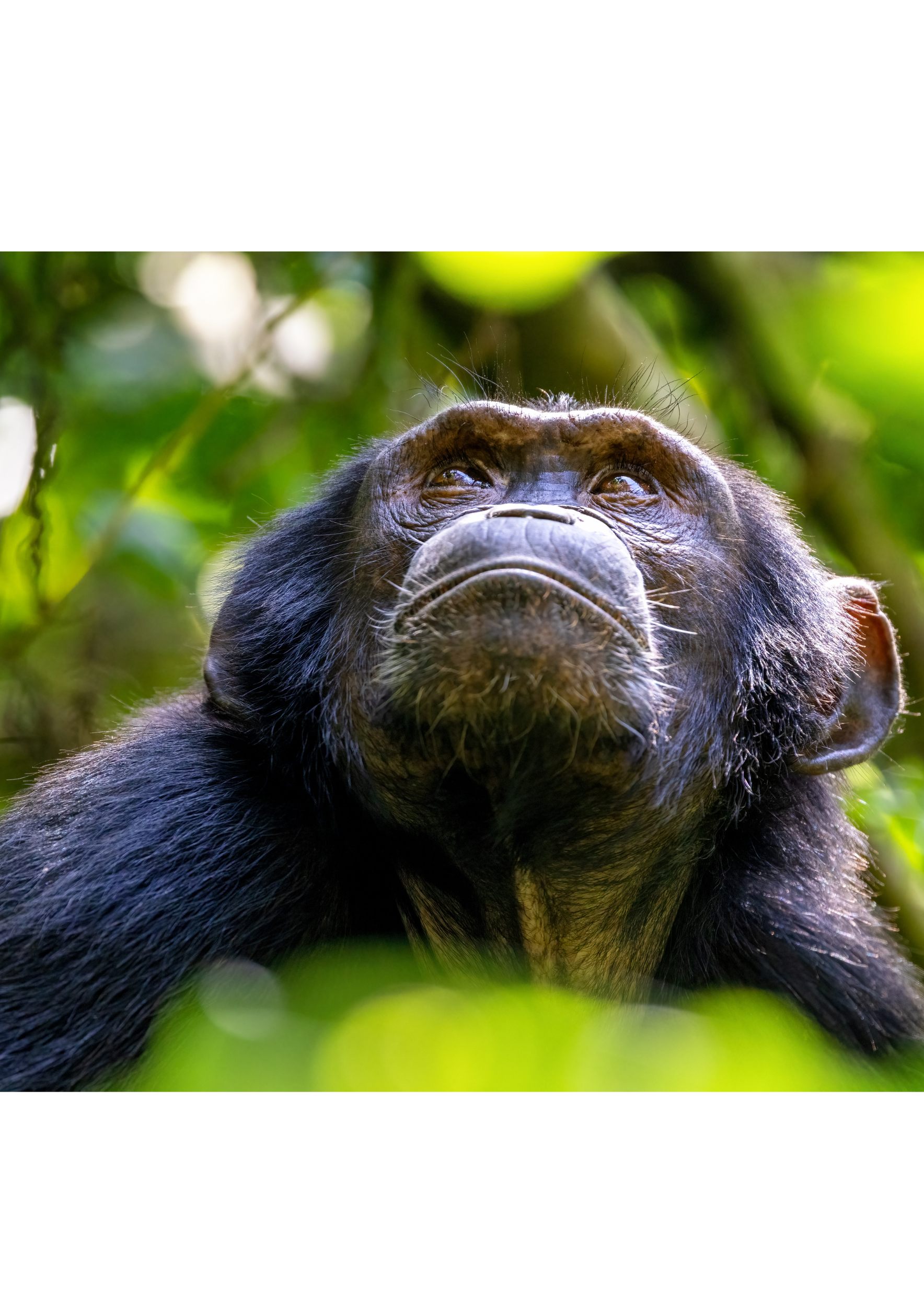
Winston Churchill visited Uganda in 1907 and called it the Pearl of Africa. He was not being poetic. He was being precise. Uganda is a country that packs more biodiversity into a smaller area than almost any other nation on earth. Over 1,000 bird species — more than the entire European continent — recorded within a single country whose land area is smaller than the state of Oregon. Thirteen primate species, including chimpanzees, red colobus, black-and-white colobus, and the olive baboon. Approximately half the world's remaining mountain gorillas. The largest freshwater lake in Africa, the second largest in the world by surface area, beginning here at its northern shore.
And yet, for most of the last three decades, the international safari circuit has routed around Uganda. Travellers fly into Nairobi and head to the Mara. They land in Dar es Salaam and go to the Serengeti. They pass over Kampala on the way to somewhere else, and they miss something that is, by any honest measure, extraordinary.
The reasons are partly historical — instability in the 1970s and 1980s created a reputation that outlasted its own accuracy by twenty years. They are partly infrastructural — the road network has been improving steadily, but it is not yet seamless in the way Kenya's is. They are partly a function of marketing, of which destinations get the glossy double-page spreads and which don't.
None of those reasons are still valid. Uganda is safe, navigable, and largely undiscovered. That combination, in a world where every savannah in East Africa now has a line of vehicles at every sighting, is not a small thing.
Queen Elizabeth National Park: Where the Lions Climb
In the south of Queen Elizabeth National Park, in the Ishasha sector, there are lions in the fig trees. This is not a metaphor. The lions of Ishasha have learned — or inherited the learning — of climbing into the broad-armed fig trees that shade the southern plains, and they spend their afternoons draped across the branches with an air of complete ownership. It is a behaviour recorded in very few places on earth: the Ishasha sector and a small area of Tanzania's Lake Manyara being the most reliable.
The reason is practical. The trees provide shade, elevation, and relief from the tsetse flies that gather in the grass below. The lions found the solution and passed it on. You find them by looking up, which is not how you normally look for lions, and the vertigo of that adjustment — the recalibration of where to direct your attention — is a small, precise pleasure.
Queen Elizabeth also contains the Kazinga Channel, the largest natural channel in Uganda, connecting Lake Edward and Lake George. A boat safari along the Kazinga at dusk is one of the finest wildlife experiences on the continent. Hippo pods surface at close range. Nile crocodiles hold the banks. Cape buffalo move through the shallows. And above it all, the bird life is extraordinary — African fish eagle, African skimmer, pink-backed pelican, pied kingfisher, a dozen species of heron.
The park is large enough to feel genuinely wild and compact enough to navigate without the feeling that you are spending most of your time in transit. It is the right scale for an unhurried stay.
Lake Bunyonyi: Thirty-Nine Islands and a Particular Quiet
Lake Bunyonyi is called the Switzerland of Africa. Not because it resembles Switzerland — the comparison is made for the terraced hillsides and the quality of the quiet, not for anything alpine. It sits at 1,962 metres above sea level in the southwest of Uganda, near the Rwandan border, and it contains 29 islands spread across water that is, unusually for East Africa, free of bilharzia. You can swim here without precaution. That is rarer than it sounds.
The colour of the hillsides around Bunyonyi exists somewhere in the range between forty and sixty distinct registers of green. In the morning, before the haze settles, the hills are sharp and three-dimensional. In the afternoon, they soften. At dusk, they go dark blue and then black against the last light on the water. A private lodge on the lakeshore, with a deck facing west, will give you one of the finest sunsets in East Africa. Nobody is marketing it. That is, for now, still the point.
The lake itself has a rhythm that rewards unhurried time. Dugout canoes on the water at dawn. The particular sound of a morning in a place where motorised traffic is absent. Birdlife without the need to seek it out — it simply arrives. Bunyonyi is not a destination you choose for a single activity. It is a destination you choose for the quality of the pause it produces.
The Source of the Nile
Jinja. The longest river in the world begins here, as a narrow, dark channel of water leaving the northern shore of Lake Victoria and heading north toward Sudan, Egypt, and the Mediterranean Sea. The distance from this point to the river's mouth at Alexandria is 6,650 kilometres. The Nile drains a basin that covers 3.3 million square kilometres. Every litre of that water passes through the narrow channel at Jinja first.
Standing at the source, you understand something physical about the word "beginning." The water is moving. It is purposeful and unhurried at the same time, the way things are when they have a very long way to go. The light at Jinja is equatorial — bright, white, without shadow at midday. The banks are green. The water is darker than you expect. Local fishermen work the edges in small boats. History is not a metaphor here. It is happening at the exact rate of a river moving north.
Jinja also offers white-water rafting on Class IV and V rapids for those who want a different relationship with the water. The town itself has developed into a pleasant base — good food, a growing creative scene, an ease that is distinctly Ugandan.
Murchison Falls: The World's Most Powerful
In the north of Uganda, the Victoria Nile forces itself through a seven-metre gorge at Murchison Falls, and the sound reaches you before the sight does. The force of water through that gap — 300 cubic metres per second compressing through a cleft barely wider than a living room — is a physical fact that the body registers differently from the mind. You feel it in your chest. The spray reaches you fifty metres away.
Below the falls, where the water spreads back into the river and continues north toward Lake Albert, the concentration of wildlife on the Nile's banks is extraordinary. Murchison Falls National Park contains the largest hippopotamus population in East Africa — hundreds of animals in pods that can stretch 200 metres along the bank. Nile crocodiles of four and five metres lie on the mud with the stillness of objects. Elephant herds move through the riverine forest. Shoebill storks, one of the most sought-after birds in Africa, are regularly sighted in the papyrus swamps at the park's northern edges.
The boat safari to the base of the falls is the standard route, and it is earned. Ninety minutes on the river, watching Africa arrange itself on both banks, the falls growing louder, more present, until you are under them and you stop speaking because there is nothing to say over the sound of water that has been falling here, at this rate, since before the pharaohs.
Churchill called it the Pearl of Africa. More than a century later, most visitors are still flying over it on the way to somewhere else.
The People
Uganda has one of the youngest populations in the world — the median age is seventeen. It is, by consistent measure, one of the friendliest countries in Africa. Not in the transactional way of an economy built entirely around tourism, but in a more genuine register — the ease of being greeted, the quality of the welcome, the particular Ugandan willingness to engage with you as a person rather than a category.
Safety is not a concern in the way that the outdated reputation might suggest. Kampala is a busy, functional, pleasantly chaotic city. Outside the capital, travel is straightforward. The country has a political stability that has attracted significant investment, and that investment is visible in the road network, the lodges, and the infrastructure that supports the parks.
What you feel in Uganda is the sense of being somewhere that has not yet been consumed by its own tourism. The guides are exceptional — trained, attentive, genuinely knowledgeable — but they are not performing. The parks are well-managed. The systems work. And the human presence — in the villages near the parks, in the market towns, in the guides who have spent their lives learning to read the bush — is warm in a way that is not a strategy. It is simply the character of the place.
The window of uncrowded Uganda is not permanent. The conservation infrastructure is established. The lodges are being built. The international operators are beginning to take notice. The traveller who discovers Uganda now will be five years ahead of the crowd. They will have had the Kazinga Channel largely to themselves, the mountain gorillas with only the legal eight people present, the source of the Nile without a visitor centre in the foreground. That is not a small thing to be able to say.